How Rankfender Works
A high-level overview of Rankfender's architecture, data flow, and how AI, SEO, and content automation work together.
Platform Architecture
Rankfender is built around a project-based architecture. Each project represents a single brand or website and contains everything required to grow its visibility: brand intelligence, content, keywords, SEO data, and AI visibility signals.
This architecture ensures strict data separation between brands while allowing shared automation, reporting, and team collaboration at the workspace level.
End-to-End Data Flow
Rankfender follows a continuous feedback loop: define → generate → publish → measure → optimize. Every module feeds the next one, allowing AI decisions to improve over time.
1. Brand Setup
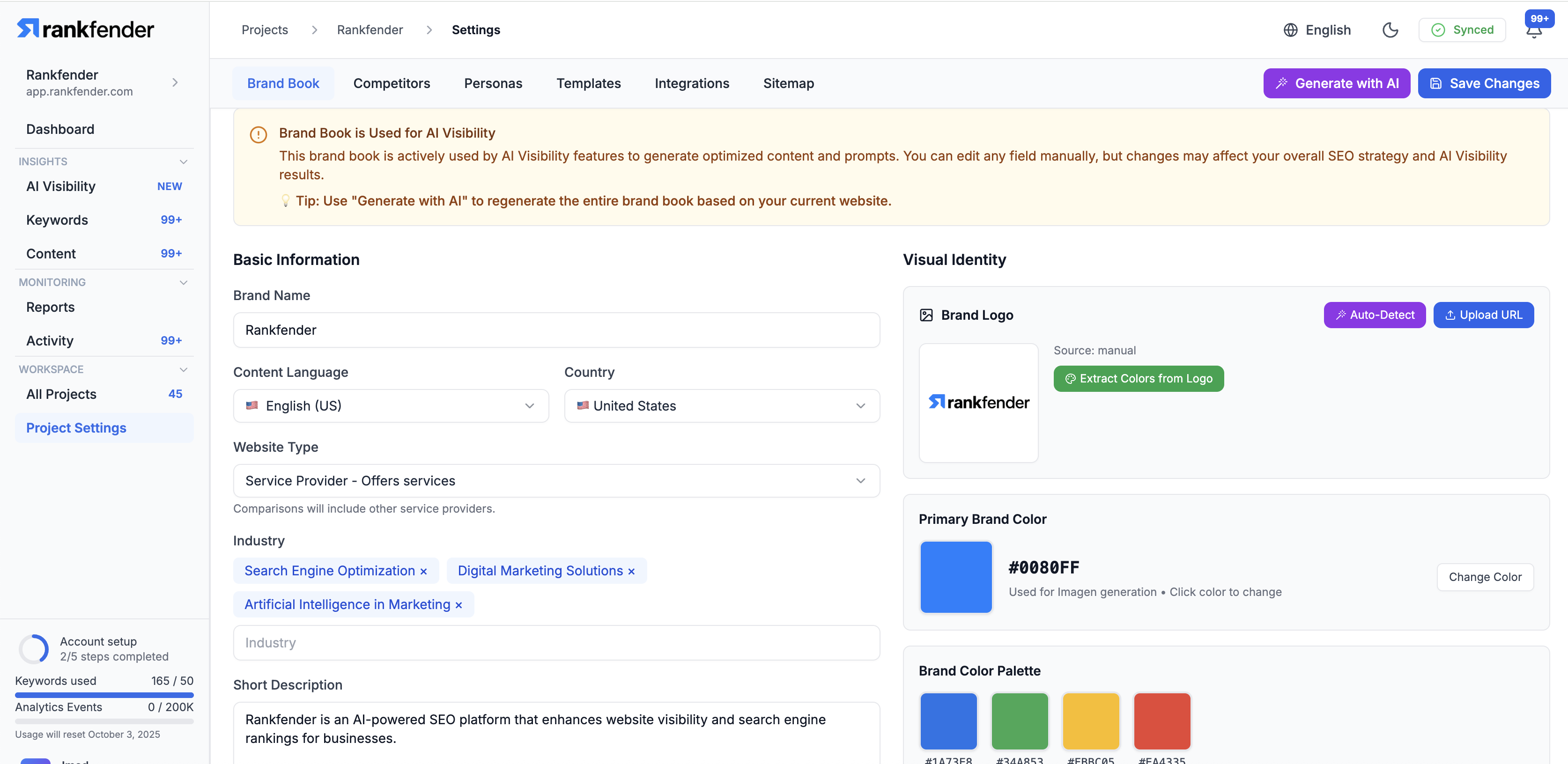
The first step is creating a Brand Book. This defines your brand's identity, positioning, tone of voice, language, industry, and visual elements.
The Brand Book is actively used by Rankfender's AI engines and directly impacts content generation, comparisons, and AI visibility.
2. Keyword Research & Opportunity Detection
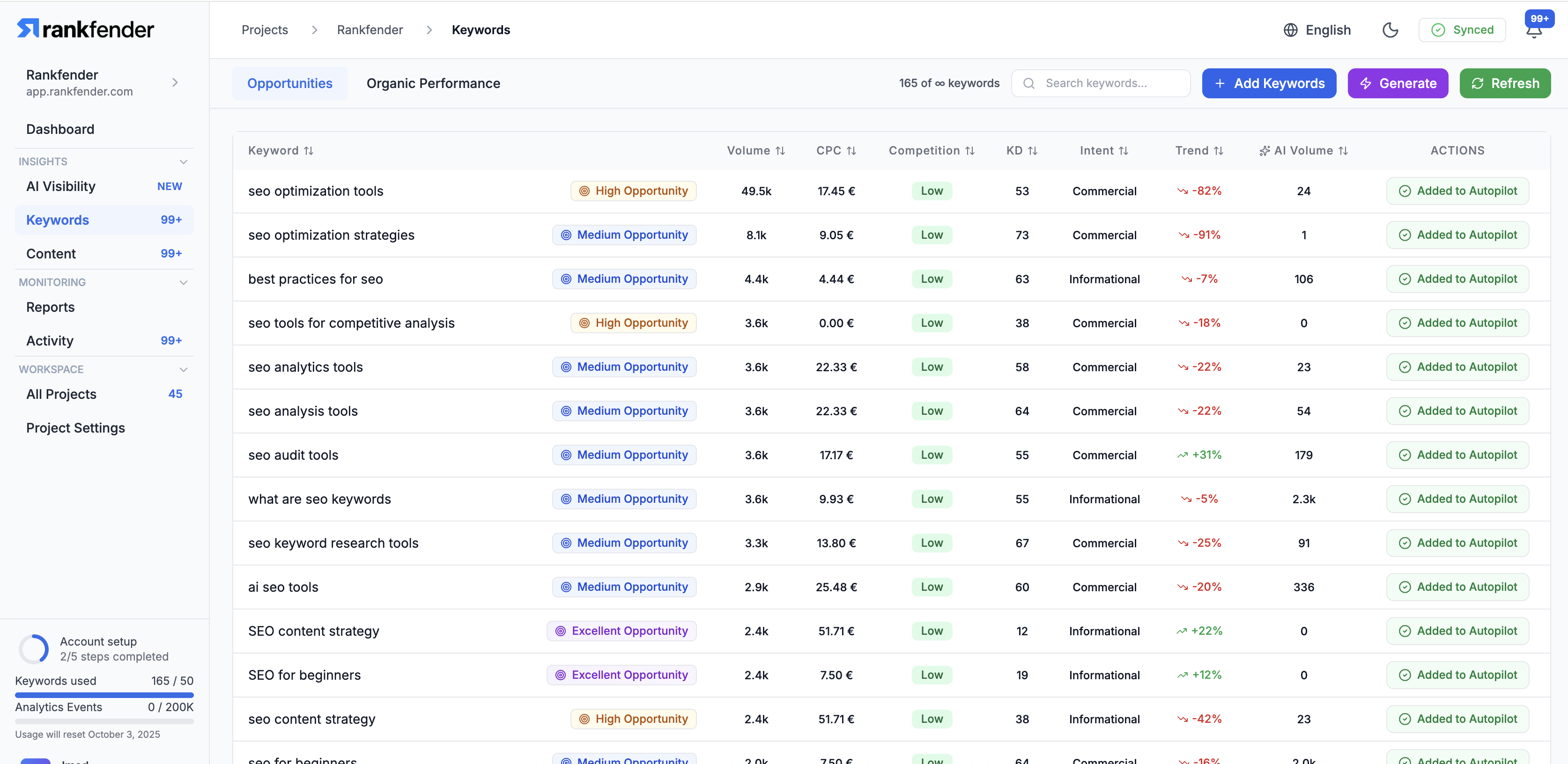
Rankfender analyzes keywords using multiple dimensions: search volume, competition, intent, trend evolution, and AI-driven demand. Each keyword is classified by opportunity level.
Keywords can be added manually or generated automatically and sent directly into content automation.
3. Content Generation (RGCE)
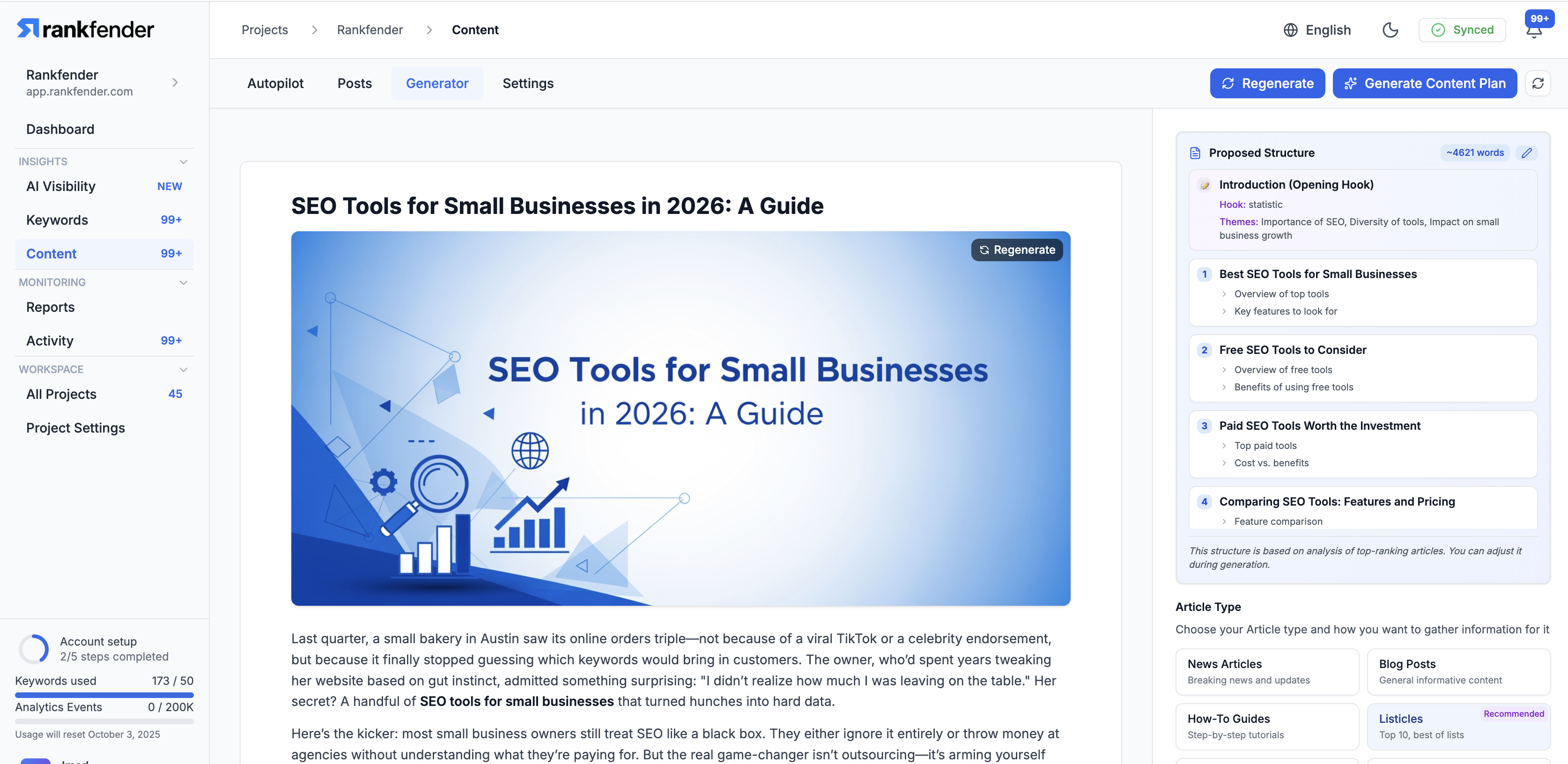
Once keywords and brand context are defined, Rankfender's RGCE (Rankfender Generative Content Engine) produces structured, long-form, SEO-optimized content.
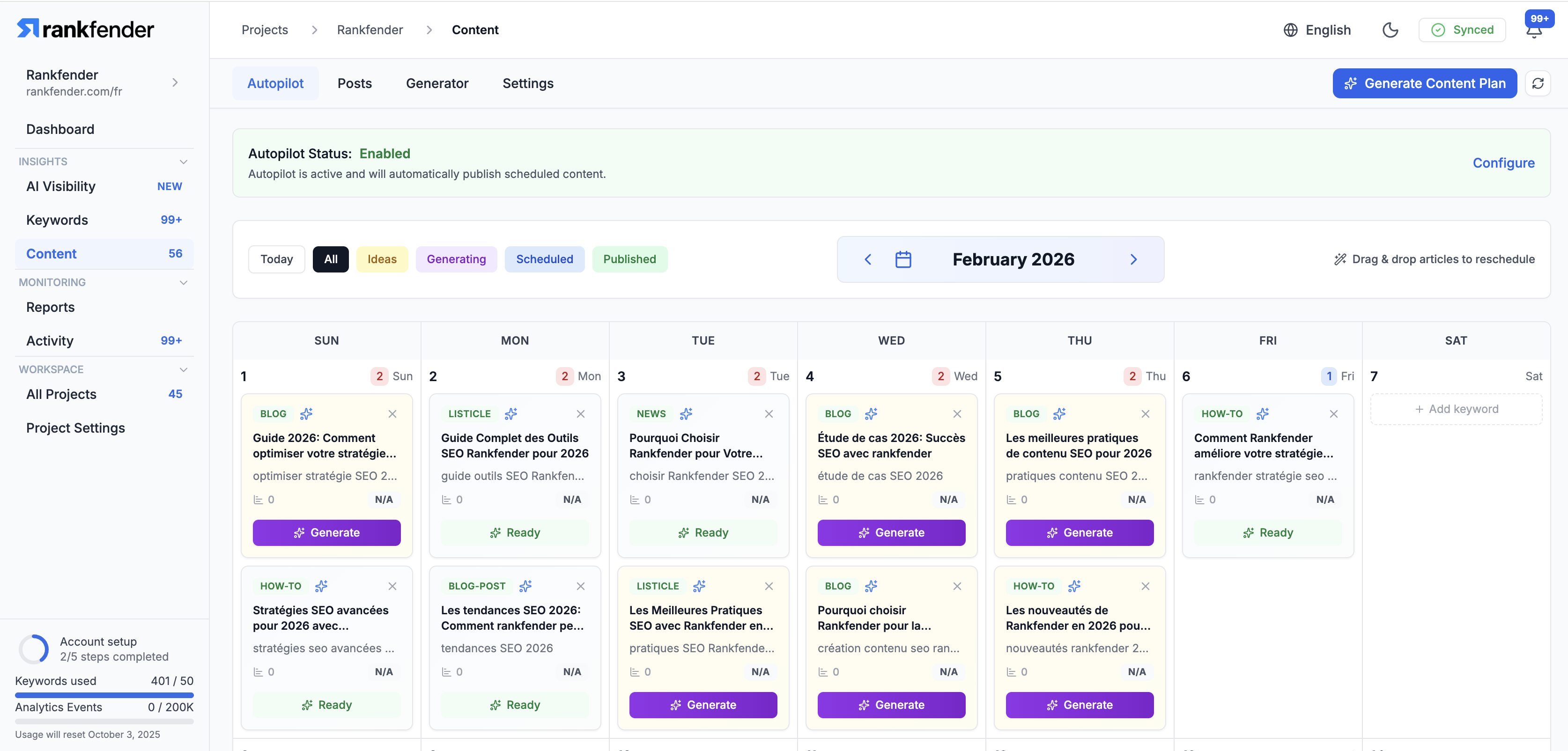
Content can be generated manually or continuously via Autopilot.
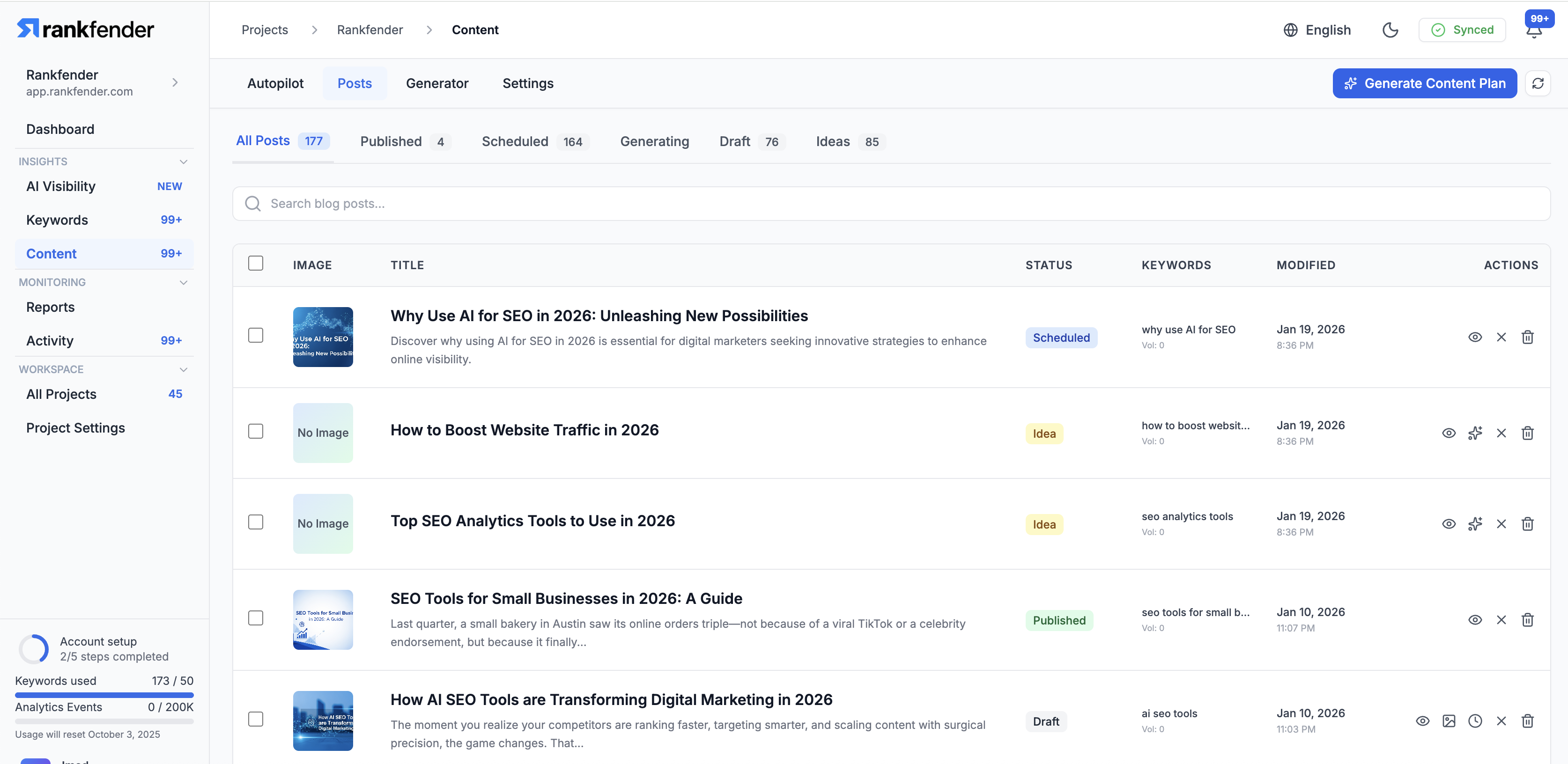
4. Publishing & Distribution
Content can be reviewed, edited, scheduled, or automatically published. Rankfender integrates with WordPress to synchronize articles, metadata, images, and internal links.
5. Monitoring & Continuous Optimization
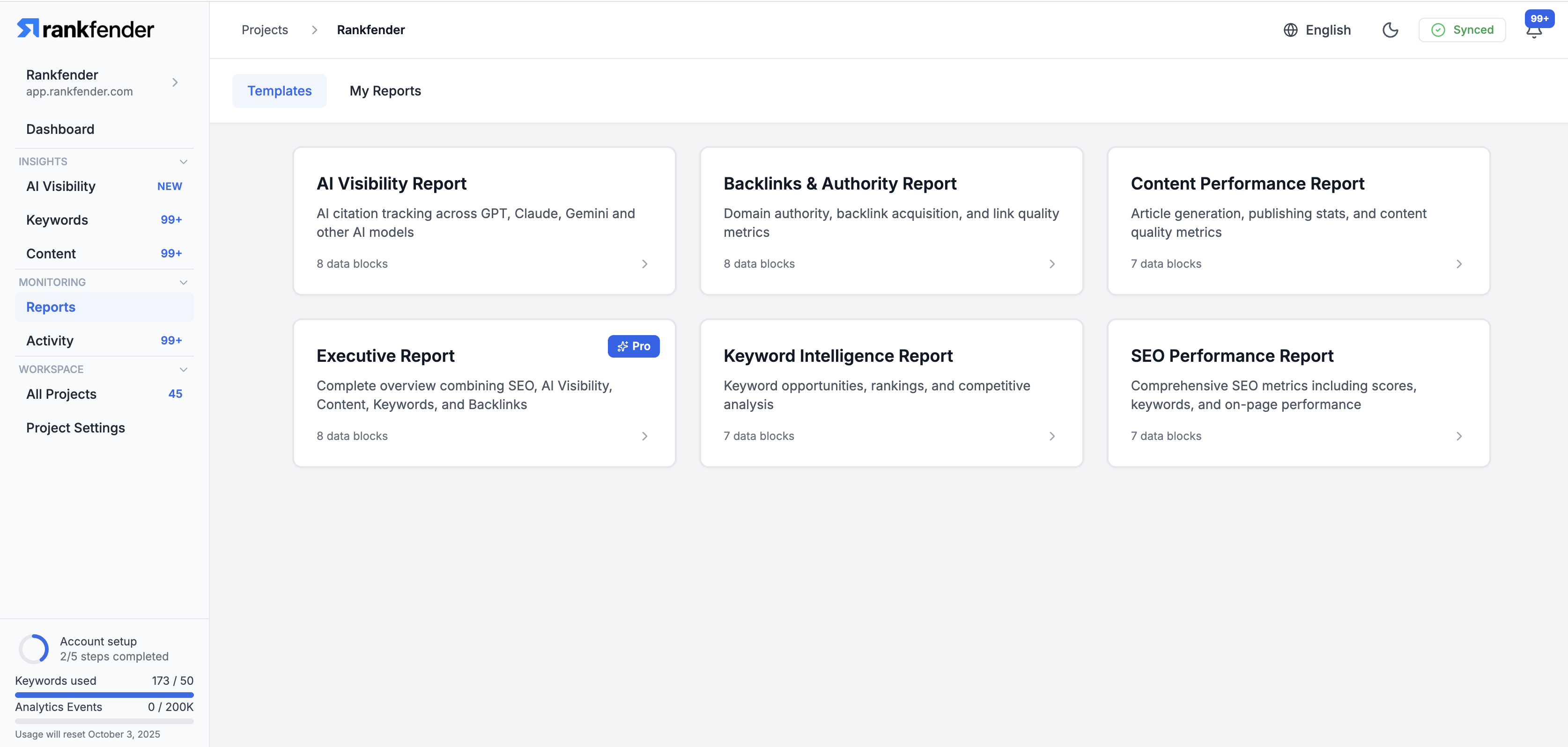
After publication, Rankfender monitors performance across both traditional SEO metrics and AI platforms. Insights feed directly back into optimization workflows.
Key Concepts
Projects
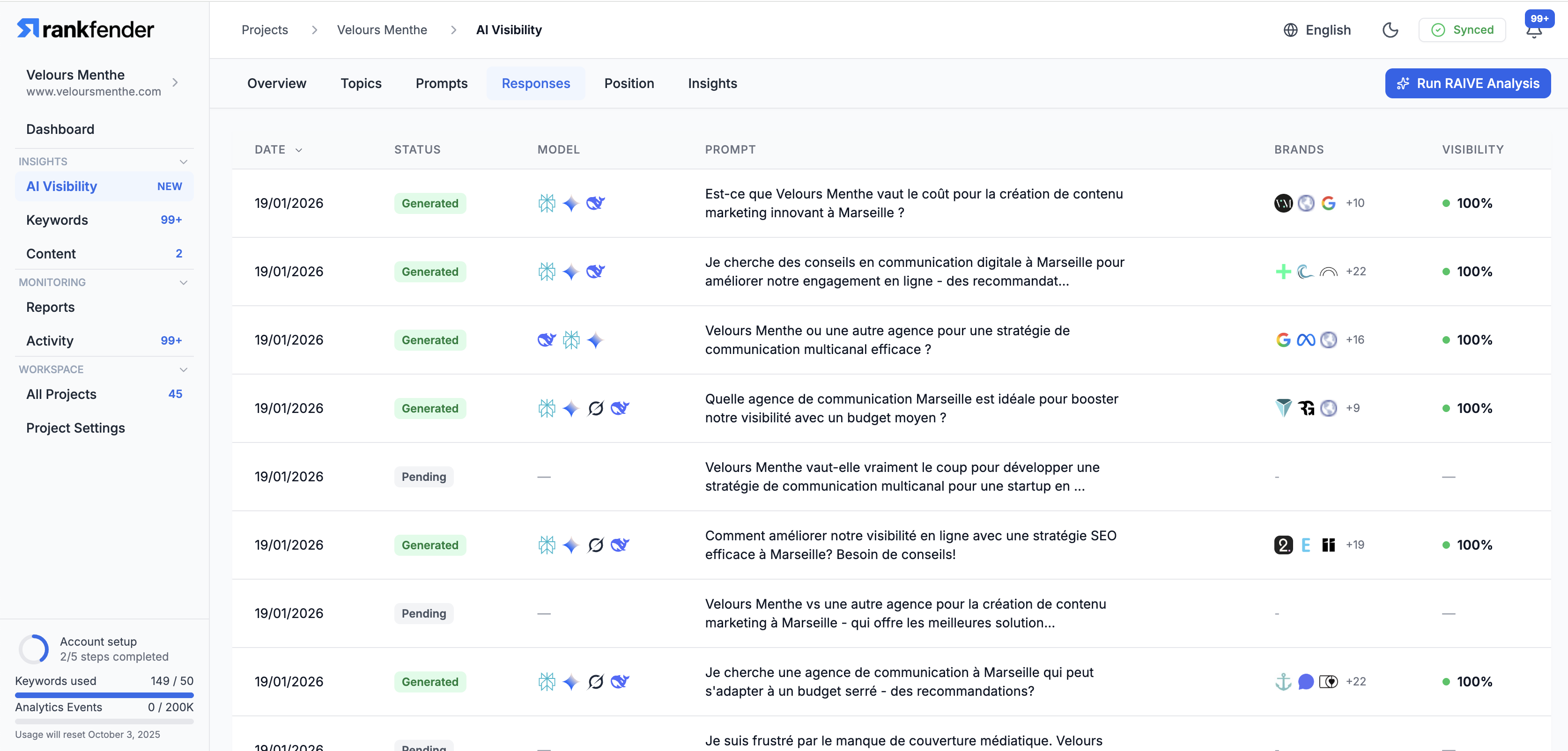
A project represents one brand or website. Each project has its own Brand Book, content library, keyword tracking, AI visibility data, and reports.
Workspaces
Workspaces group multiple projects under one account. Permissions, limits, and billing are managed at this level.
AI Visibility
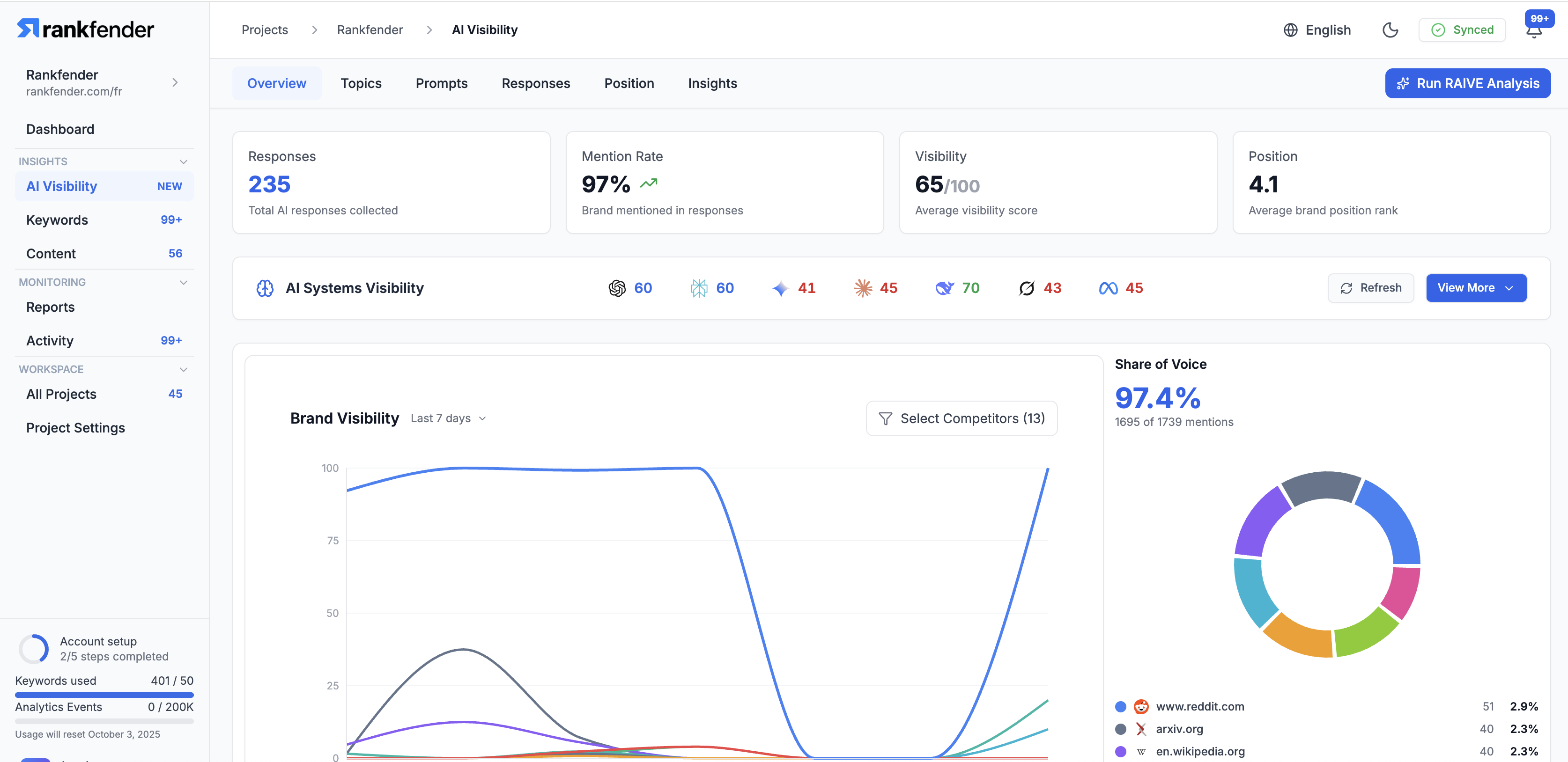
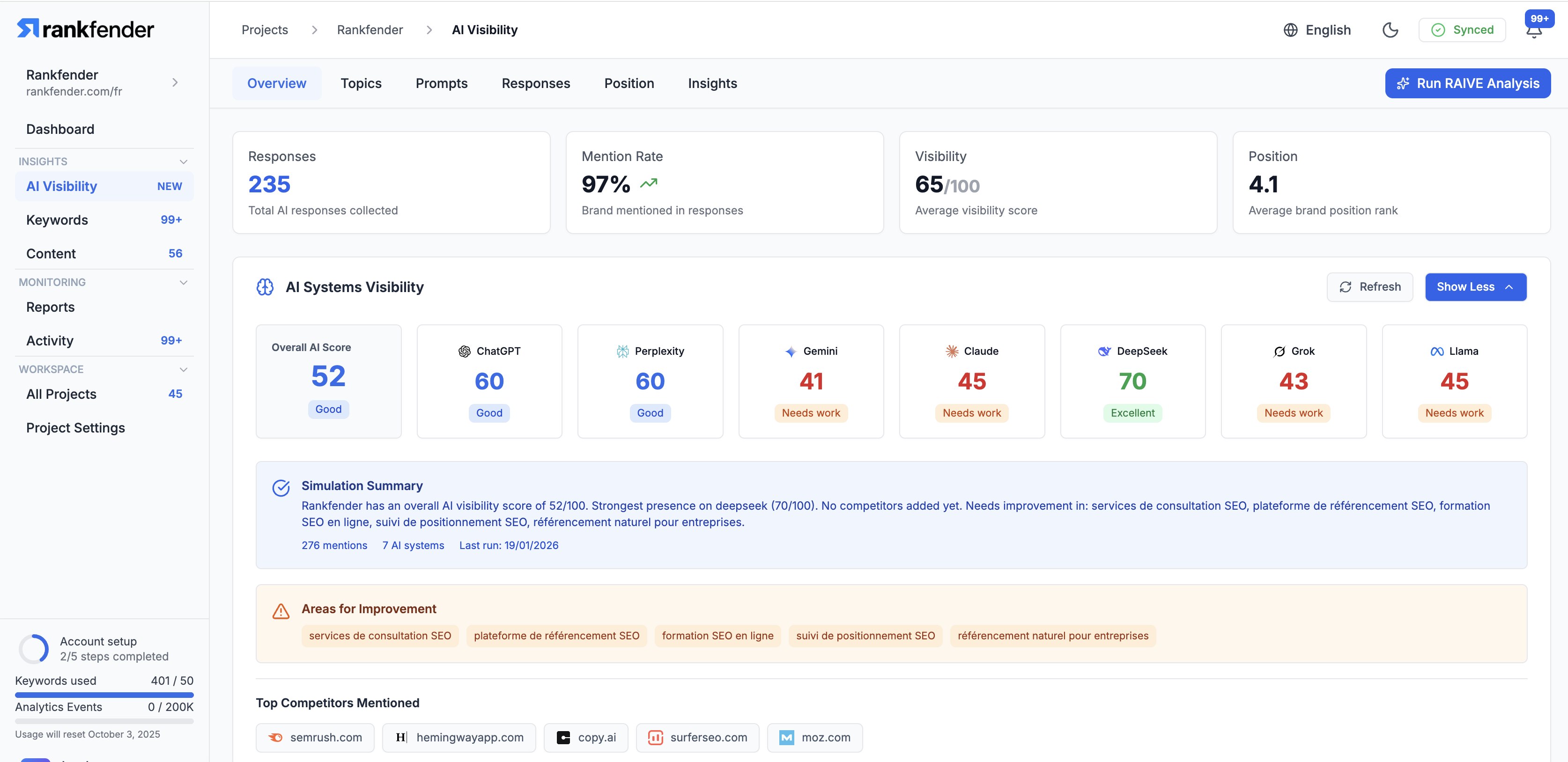
AI Visibility measures how your brand appears inside AI-generated answers, tracking presence and prominence across ChatGPT, Claude, Gemini, and Perplexity.
AI Citation Score
The AI Citation Score reflects how frequently AI systems reference your brand when answering relevant prompts.
Common Workflows
Automated Content Production
- Add or generate target keywords
- Configure content and brand rules
- Enable Content Autopilot
- Review drafts or auto-publish
- Monitor performance
AI Visibility Optimization
- Create Topics aligned with your expertise
- Define AI search Prompts
- Track AI-generated responses
- Measure brand positioning
- Optimize content for higher citations